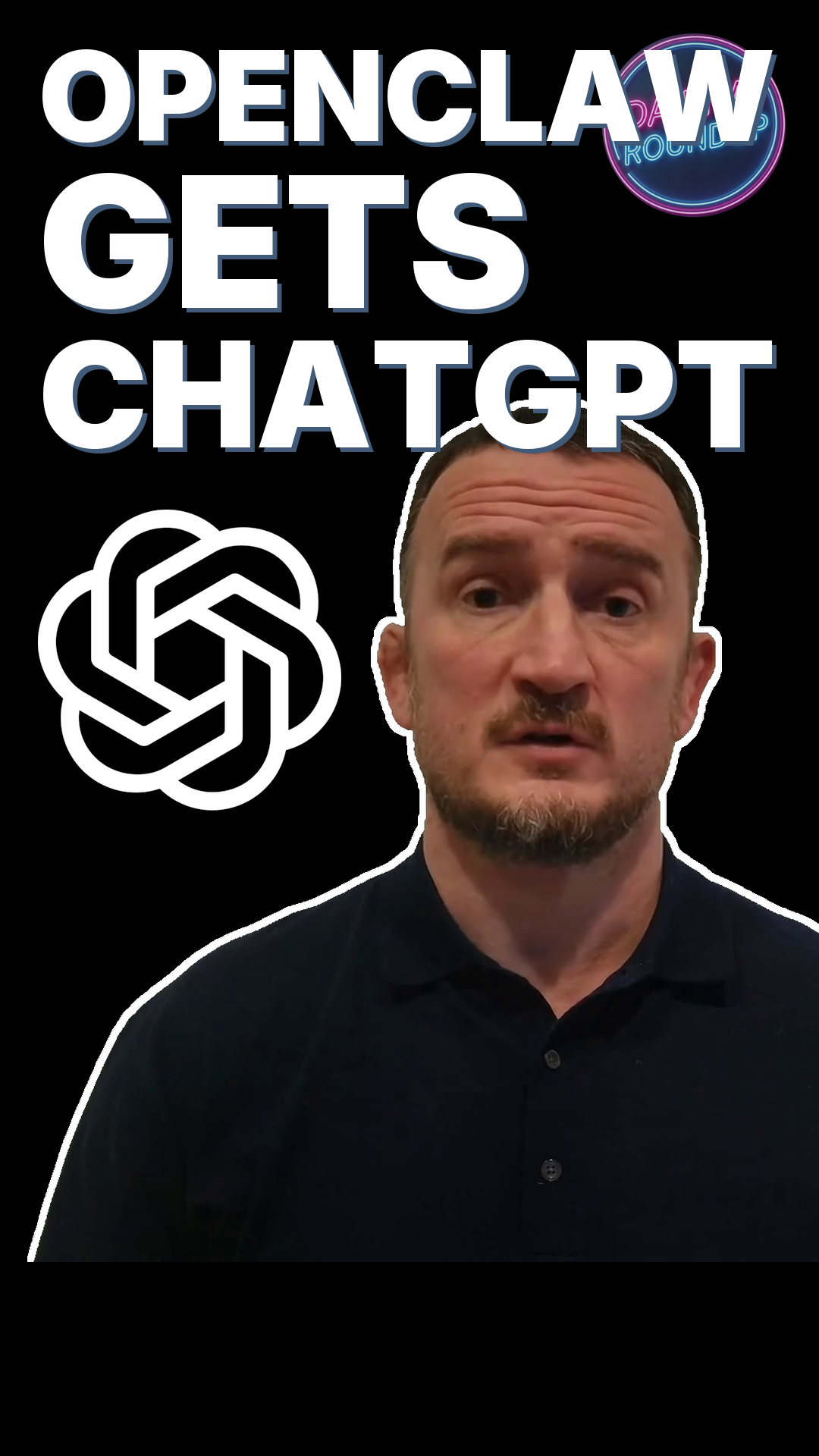
Sam Altman Plugs ChatGPT Into OpenClaw - Anthropic Blocks Claude on the Same Agent Platform
0:00 / 0:56
News
Sam Altman Plugs ChatGPT Into OpenClaw - Anthropic Blocks Claude on the Same Agent Platform
calendar_today Date:
schedule Duration: 0:56
visibility Views: 318
database
Summary Report
OpenAI now lets ChatGPT subscribers sign in to OpenClaw, the open-source agent framework, with their existing accounts. Anthropic blocked Claude access on the same day.
- 01. ChatGPT subscribers can sign in to OpenClaw via OAuth and use their existing subscription on the agent platform.
- 02. Plus users access GPT-5.4 through the Codex endpoint without a separate API bill.
- 03. OpenClaw is a local-first open-source AI agent framework that crossed three million users this year.
- 04. Anthropic blocked Claude access to OpenClaw on the same day OpenAI plugged in.
- 05. OpenClaw founder Peter Steinberger joined OpenAI in February 2026.
Sam Altman has quietly announced a significant integration between OpenAI's ChatGPT subscription service and OpenClaw, the open-source AI agent framework. ChatGPT Plus subscribers can now authenticate directly through OAuth and access GPT-5.4 via the Codex endpoint to run autonomous agents on their own hardware, bypassing separate API charges.
The timing of this announcement carries particular weight, as Anthropic simultaneously blocked Claude access to the same platform. This strategic divergence illustrates fundamentally different approaches to AI agent distribution. OpenAI appears to view agent platforms as valuable distribution channels for their services, whilst Anthropic treats them as potential competitive threats requiring restriction.
OpenClaw, developed by Peter Steinberger who joined OpenAI in February, has achieved remarkable traction with over three million users and 350,000 GitHub stars in under five months—reportedly the fastest growth GitHub has recorded. The platform's local-first approach allows users to run AI agents directly on their machines rather than relying on cloud-based services.
This development signals a shift in competitive dynamics amongst AI providers. Rather than competing solely on benchmark performance, companies are now vying for control over how their models integrate with agent platforms and developer tools. The battle has moved from the laboratory to the laptop, with subscription models becoming the new battleground for AI model access and distribution.
Meta Data
Model: